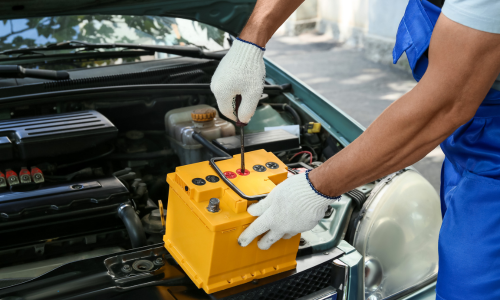
For businesses operating multiple vehicles, car battery replacement in Sharjah needs to be more than a last-minute response to a vehicle that will not start. Delivery companies, rental operators, corporate transport teams, service providers and logistics businesses depend on their vehicles being available when needed. An unexpected battery failure can delay scheduled journeys, affect customer commitments and disrupt daily operations. A planned fleet battery replacement approach helps businesses identify battery problems earlier, organise replacements and reduce avoidable vehicle downtime.
When several vehicles operate across different locations or shifts, managing battery condition becomes particularly important. Instead of waiting for drivers to report starting problems, fleet managers can use inspection records, battery testing and replacement schedules to make better maintenance decisions.
This guide explains how businesses in Sharjah can manage fleet battery replacement, plan inspections, coordinate mobile services and keep vehicles available for daily operations.
Quick Answer: How Can Businesses Reduce Fleet Battery Downtime?
Businesses can reduce battery-related downtime by following a structured maintenance process:
- Maintain battery records for every vehicle.
- Inspect batteries regularly according to vehicle usage and operating conditions.
- Test battery condition rather than relying only on age.
- Identify repeated starting problems early.
- Plan replacements before batteries become unreliable.
- Keep the correct battery specifications for each vehicle.
- Coordinate replacement appointments around vehicle schedules.
- Use mobile battery services where suitable.
- Check the charging system after replacement.
- Track battery failures and replacement history.
The main objective is to identify battery problems before they interrupt planned vehicle operations.
Why Is Battery Management Important for Fleet Vehicles?
A private vehicle may remain unused when its battery fails. A commercial vehicle, however, may be part of a scheduled operation involving drivers, customers, deliveries or service appointments.
When one vehicle becomes unavailable, the impact can extend beyond the battery replacement itself.
For example, a delivery vehicle that fails to start before its morning route may cause:
- Missed delivery windows.
- Delayed customer orders.
- Changes to driver schedules.
- Additional workload for other vehicles.
- Unplanned maintenance expenses.
- Disruption to route planning.
For larger fleets, multiple unexpected battery failures can create operational pressure, especially during busy periods.
A planned battery management process helps fleet managers understand which vehicles need attention and arrange maintenance with less disruption.
What Causes Fleet Vehicle Batteries to Fail?
Fleet vehicles can experience different battery conditions depending on how they are used.
Understanding these operating patterns helps businesses plan more suitable inspection and replacement schedules.
1. Frequent Starting and Short Journeys
Vehicles that start frequently but travel only short distances may not always have enough operating time to replenish the energy used during starting.
Repeated short journeys can contribute to battery discharge, depending on the vehicle’s charging system and electrical load.
This can be particularly relevant to delivery vehicles, service fleets and vehicles making multiple daily stops.
2. Extended Parking Periods
Some fleet vehicles may remain unused during weekends, holidays or periods of low demand.
While parked, electrical systems can continue drawing a small amount of power. Over time, this can contribute to battery discharge, particularly if the battery is already ageing or the vehicle has an electrical drain.
3. High Electrical Demand
Commercial vehicles may operate additional electrical equipment such as:
- GPS tracking systems.
- Dash cameras.
- Communication equipment.
- Security systems.
- Refrigeration or auxiliary equipment.
- Additional lighting.
- Electronic accessories.
The suitability of the battery and charging system should be assessed against the vehicle’s actual electrical requirements.
4. Battery Age and Wear
Automotive batteries gradually lose their ability to store and deliver sufficient power.
A battery may continue starting a vehicle for some time before its performance becomes unreliable. This is why testing is more useful than relying exclusively on the installation date.
5. Charging-System Problems
A battery that repeatedly becomes discharged may not be the only problem.
Possible causes include:
- Alternator or charging-system faults.
- Loose or corroded terminals.
- Damaged electrical connections.
- Parasitic electrical drain.
- Incorrect battery specification.
- Battery-monitoring or sensor problems.
Replacing the battery without identifying the underlying issue can result in another failure.
How to Build a Fleet Battery Inspection Schedule
One of the most effective ways to manage battery-related downtime is to introduce regular inspections.
The inspection frequency should reflect the fleet’s size, vehicle usage, battery condition and maintenance history.
There is no universal inspection interval that suits every fleet.
Step 1: Create a Battery Record for Every Vehicle
Maintain a central record containing:
| Information | What to Record |
|---|---|
| Vehicle registration | Vehicle identification |
| Vehicle model | Make, model and year |
| Battery brand | Installed battery manufacturer |
| Battery specification | Ah, CCA and battery type |
| Installation date | When the current battery was fitted |
| Last inspection | Most recent battery check |
| Test results | Voltage and available battery test readings |
| Replacement history | Previous battery changes |
| Current condition | Good, needs monitoring or replacement recommended |
This information helps maintenance teams identify vehicles that may require closer attention.
Step 2: Prioritise High-Usage Vehicles
Not every fleet vehicle operates under the same conditions.
For example:
- Delivery vehicles may make frequent stops.
- Rental vehicles may experience different drivers and usage patterns.
- Corporate vehicles may remain parked for long periods.
- Service vehicles may carry additional electrical equipment.
Identify vehicles with demanding operating patterns and prioritise them for appropriate battery inspections.
Step 3: Test Rather Than Guess
A visual inspection can identify obvious problems, but it cannot always reveal the battery’s actual condition.
Battery testing can provide useful information about:
- Battery voltage.
- State of charge (SOC).
- State of health (SOH), where supported by the test equipment.
- Cold cranking performance (CCA).
- Internal resistance, depending on the tester.
- Charging-system performance.
Use the test results alongside battery age, vehicle behaviour and manufacturer recommendations to decide whether the battery needs charging, monitoring or replacement.
Step 4: Record Every Inspection
Inspection records help fleet managers identify recurring problems.
For example, if a particular vehicle repeatedly shows low battery charge, the maintenance team can investigate its charging system or electrical drain rather than repeatedly replacing the battery.
When Should a Fleet Vehicle Battery Be Replaced?
There is no single replacement age that applies to every vehicle.
Battery service life depends on battery technology, operating conditions, vehicle electrical demand, charging performance and maintenance.
Instead of replacing every battery at the same time, fleet managers should consider the following warning signs.
Slow Engine Cranking
If the engine turns over more slowly than usual, the battery may not be delivering sufficient starting power.
Repeated Starting Problems
A vehicle that needs frequent jump-start assistance should be inspected.
Battery Test Results
A battery that consistently fails an appropriate battery health test may need replacement.
Visible Battery Damage
Swelling, leakage, cracks or damaged terminals require attention. A damaged battery should not continue in service.
Repeated Low-Charge Conditions
If the battery frequently becomes discharged, investigate the charging system and electrical demand before deciding on replacement.
For more information about common warning signs, read our guide on how to know when your car battery needs replacement in the UAE.
How to Plan Fleet Battery Replacement Without Disrupting Operations
A replacement schedule should support the fleet’s operating requirements.
Replacing batteries randomly can create unnecessary vehicle downtime, while waiting until a vehicle fails can disrupt planned work.
A better approach is to organise replacements around inspection results and vehicle availability.
1. Group Vehicles by Replacement Priority
Divide vehicles into practical categories:
Priority 1 – Immediate Attention
Vehicles with failed battery tests, damaged batteries or repeated starting problems.
Priority 2 – Monitor Closely
Vehicles showing reduced battery performance but still operating normally.
Priority 3 – Routine Inspection
Vehicles with satisfactory test results that should continue through the regular inspection schedule.
This allows maintenance teams to focus on vehicles that need attention first.
2. Schedule Replacements During Planned Downtime
Where possible, arrange battery replacement during:
- Scheduled vehicle servicing.
- Driver shift changes.
- Planned rest periods.
- Periods of lower vehicle demand.
- Existing maintenance appointments.
This can reduce the additional disruption caused by separate maintenance visits.
3. Avoid Replacing Every Battery at Once
Replacing all fleet batteries based only on a fixed calendar date may lead to unnecessary expenditure.
Individual battery condition and vehicle requirements should guide replacement decisions.
A vehicle with a healthy battery may not need replacement simply because another vehicle in the same fleet has experienced a battery failure.
4. Coordinate Multiple Vehicles
If several vehicles need new batteries, organise the work by location, vehicle type or operational schedule.
This can make it easier to arrange technicians, confirm battery availability and reduce unnecessary movement between service locations.
Why Correct Battery Selection Matters for Fleet Vehicles
Choosing the right replacement battery is just as important as deciding when to replace it.
A battery that fits physically may still be unsuitable for the vehicle’s electrical requirements.
Before ordering, check the following specifications.
Battery Capacity (Ah)
Ampere-hours indicate the battery’s rated capacity under specified conditions.
The replacement should meet the vehicle manufacturer’s requirements.
Cold Cranking Amps (CCA)
CCA indicates a battery’s ability to deliver starting current under specified cold-temperature test conditions.
It is an important specification when comparing batteries for vehicles that require particular starting performance.
Battery Technology
Different vehicles may require conventional lead-acid, EFB or AGM batteries.
The correct technology depends on the vehicle’s design and electrical system.
Physical Dimensions
The battery should fit securely in the designated compartment.
Terminal Position
The terminal arrangement must match the vehicle’s connection requirements.
Manufacturer Compatibility
Always confirm the recommended battery specification using the vehicle details and applicable manufacturer requirements.
For fleets containing different vehicle makes and models, maintaining a battery specification list can make future replacements easier to coordinate.
Should Fleet Managers Keep Spare Batteries in Stock?
Keeping spare batteries may be useful for certain operations, but it is not automatically the best approach for every business.
The decision depends on:
- Fleet size.
- Number of vehicles using the same battery specification.
- Replacement frequency.
- Supplier availability.
- Storage capacity.
- Battery stock rotation.
- Budget.
- Vehicle downtime impact.
For a large fleet using several different battery types, maintaining a large stock can create inventory-management challenges.
A more practical approach may be to identify the most frequently used battery specifications and discuss availability and replenishment arrangements with a supplier.
Where spare batteries are stored, follow the manufacturer’s storage, charging and handling instructions.
How Mobile Battery Replacement Can Reduce Fleet Downtime
Taking every vehicle to a workshop for battery replacement may not always be practical.
For fleets operating across Sharjah, vehicles may be located at offices, warehouses, customer premises, parking facilities or roadside locations.
Mobile battery replacement can reduce the need to move a vehicle that cannot start.
Depending on the vehicle and service availability, a technician may be able to:
- Test the existing battery.
- Confirm the correct replacement specification.
- Bring a compatible replacement battery.
- Install the new battery at the vehicle’s location.
- Check the charging system.
- Perform any required battery registration or adaptation on supported vehicles.
Al Bayan Battery Experts provides mobile car battery replacement and installation services in Sharjah, Ajman and Dubai.
For businesses managing several vehicles, it is useful to discuss vehicle locations, battery specifications, expected quantities and preferred service timings before arranging replacements.
Important: Mobile replacement availability and the diagnostic procedures required depend on the vehicle, location and service arrangement. Confirm these details before scheduling.
How to Organise Fleet Battery Replacement Across Sharjah
Fleet vehicles may operate across different parts of Sharjah, making service coordination important.
A centralised maintenance plan can help businesses avoid managing each battery issue as a separate emergency.
Maintain a Vehicle Location List
Record where each vehicle is normally parked or operated.
This helps coordinate inspection and replacement appointments.
Assign a Responsible Contact
Identify a fleet manager, transport supervisor or authorised employee who can confirm vehicle availability and approve replacement work.
Share Vehicle Details Before Booking
Provide:
- Vehicle make and model.
- Model year.
- Current battery information, if available.
- Battery-related symptoms.
- Vehicle location.
- Preferred appointment time.
This allows the service provider to understand the requirement before arranging the visit.
Confirm Battery Availability
For multiple vehicles, confirm whether the required battery specifications are available before scheduling the work.
Review Completed Work
After replacement, update the vehicle’s maintenance record with the installation date, battery specification and any relevant test results.
This information becomes useful when planning future inspections.
How to Calculate the Cost of Fleet Battery Replacement
The cost of replacing fleet batteries depends on more than the number of vehicles.
Factors may include:
- Vehicle make and model.
- Required battery type.
- Battery capacity and CCA.
- Brand selection.
- Number of vehicles.
- Installation requirements.
- Diagnostic or registration procedures.
- Mobile service arrangements.
- Location and scheduling requirements.
For a more accurate commercial quotation, prepare a vehicle list with the required battery specifications and estimated replacement quantities.
This allows the supplier to assess the actual requirements instead of providing a general price that may not apply to every vehicle.
Fleet managers should also consider the operational cost of downtime.
For example, a low-cost battery that does not meet the vehicle specification may create additional maintenance problems, while an unexpected breakdown can disrupt delivery schedules and customer commitments.
The better decision is to compare the complete replacement requirement, not simply the lowest battery price.
Common Fleet Battery Management Mistakes to Avoid
Waiting Until a Vehicle Fails
Emergency replacement can disrupt routes and schedules. Regular testing helps identify potential problems earlier.
Using the Same Battery for Every Vehicle
Different vehicles may require different battery capacities, technologies and dimensions.
Ignoring Charging-System Problems
A new battery will not solve an alternator or electrical-drain issue.
Keeping Incomplete Maintenance Records
Without installation dates and test results, it becomes harder to identify patterns and plan replacements.
Replacing Batteries Based Only on Age
Battery age is useful information, but condition and test results should also guide the decision.
Not Coordinating Replacement Appointments
Unplanned visits can make vehicles unavailable at inconvenient times.
Failing to Check After Installation
A completed replacement should be followed by the appropriate checks to confirm that the battery and charging system are operating as expected.
Fleet Battery Management Checklist
Use this checklist to organise battery inspections and replacements across your fleet.
Vehicle Records
- Maintain a list of all fleet vehicles.
- Record battery specifications.
- Record installation dates.
- Update battery inspection history.
Battery Inspection
- Check for visible damage.
- Test battery condition.
- Check terminal connections.
- Review charging-system performance.
- Identify repeated discharge problems.
Replacement Planning
- Prioritise vehicles based on test results.
- Confirm the correct battery specification.
- Check battery availability.
- Coordinate replacement appointments.
- Arrange mobile service where suitable.
After Replacement
- Confirm correct installation.
- Perform appropriate post-installation checks.
- Complete registration or adaptation where required.
- Update vehicle maintenance records.
- Monitor repeated battery problems.
Frequently Asked Questions
How often should fleet vehicle batteries be replaced?
There is no universal replacement interval. Battery condition, vehicle usage, battery technology, charging performance and inspection results should guide replacement decisions.
How can a business reduce battery-related fleet downtime?
Maintain battery records, schedule regular inspections, test battery condition, identify warning signs early and arrange replacements before batteries fail unexpectedly.
Can fleet car batteries be replaced at the vehicle’s location?
Mobile battery replacement may be available depending on the vehicle, location and service provider. It can be useful when vehicles cannot conveniently be taken to a workshop.
Should all vehicles in a fleet use the same battery?
No. Battery requirements vary by vehicle make, model, engine, electrical system and manufacturer specification. Each vehicle should be checked individually.
How can fleet managers know which batteries need replacement first?
Use battery test results, starting performance, visible condition, repeated discharge history and vehicle operating requirements to prioritise replacements.
Does a new battery need registration after replacement?
Some modern vehicles require battery registration, coding or adaptation after installation. The requirement depends on the vehicle’s battery-management system.
What causes repeated battery failures in commercial vehicles?
Possible causes include battery ageing, frequent short journeys, extended parking, electrical drain, charging-system faults and incorrect battery selection. Diagnosis is important before replacing the battery again.
Can a mobile battery service handle several fleet vehicles?
This depends on the provider’s service capacity, vehicle locations, battery availability and scheduling arrangements. Businesses should confirm the number of vehicles, specifications and preferred service times before booking.
What information should I provide when requesting fleet battery replacement in Sharjah?
Provide the vehicle list, make and model, model year, current battery specifications where available, vehicle locations, symptoms and estimated replacement quantities.
Final Takeaway
Fleet car battery replacement in Sharjah should be managed as part of an ongoing vehicle maintenance process rather than treated as an emergency task every time a vehicle fails to start.
For businesses operating multiple vehicles, the most effective approach is to maintain battery records, monitor battery condition, select the correct replacement specification and coordinate service appointments around operational schedules.
A structured process can help reduce unexpected battery-related downtime, improve maintenance planning and keep vehicles available for their intended work.
Remember:
Inspect → Test → Prioritise → Replace → Verify → Record
If your business needs battery replacement for individual vehicles or a commercial fleet, explore Al Bayan Battery Experts’ car battery installation service to discuss vehicle specifications, mobile service availability and replacement requirements in Sharjah.