Sharjah’s weather is challenging for every vehicle owner. During summer, temperatures frequently exceed 45°C, while the interior of a parked car can easily reach 65–75°C. Prolonged exposure to intense sunlight doesn’t just make driving uncomfortable—it also damages your car’s interior, fades upholstery, increases air conditioning usage, and exposes passengers to harmful UV rays.
Choosing the right car window tint is one of the smartest investments for drivers in Sharjah. However, with multiple options available—including ceramic tint, carbon tint, and dyed tint—many car owners struggle to determine which film offers the best protection and value.
This guide compares all three window tint types in detail, helping you choose the ideal solution for Sharjah’s extreme climate.
Why Window Tint Matters in Sharjah
Unlike countries with moderate weather, the UAE’s climate places unique demands on automotive window films.
Quality window tint helps:
- Block excessive solar heat
- Reduce cabin temperature
- Filter harmful UV rays
- Improve driving comfort
- Protect dashboard and leather seats
- Reduce glare while driving
- Improve fuel efficiency by lowering AC usage
- Enhance vehicle privacy
- Improve safety by holding shattered glass together
Not every window tint performs equally. The material used determines how effectively it handles Sharjah’s harsh sunlight.
Understanding the Three Main Types of Window Tint
Before comparing performance, it’s important to understand how each tint is manufactured.
1. Dyed Window Tint
Dyed window tint is the most basic and affordable option. It contains a layer of dye that absorbs sunlight before it enters the vehicle.
Advantages
- Lowest installation cost
- Improves vehicle appearance
- Offers privacy
- Reduces glare
Disadvantages
- Limited heat rejection
- Fades over time
- Less durable
- Lower infrared protection
- Shorter lifespan
Dyed films are typically suitable for drivers with limited budgets or older vehicles where premium performance isn’t required.
2. Carbon Window Tint
Carbon tint uses carbon particles instead of dye.
Unlike dyed film, carbon doesn’t fade easily and blocks significantly more heat.
Advantages
- Better heat rejection
- Excellent UV protection
- Matte premium finish
- Doesn’t fade quickly
- Long lifespan
- No signal interference
Disadvantages
- Higher cost than dyed tint
- Heat rejection lower than ceramic
Carbon tint is considered an excellent mid-range solution for UAE weather.
3. Ceramic Window Tint
Ceramic tint is the highest-performing automotive window film currently available.
Instead of dyes or metals, it contains microscopic ceramic particles that block infrared heat without affecting visibility.
Advantages
- Maximum heat rejection
- Superior UV protection
- Excellent infrared blocking
- Crystal-clear visibility
- No fading
- Doesn’t interfere with GPS, mobile signals, Bluetooth, or RFID
- Longest lifespan
Disadvantages
- Premium price
- Professional installation required
Ceramic film is widely regarded as the best solution for extreme climates like Sharjah.
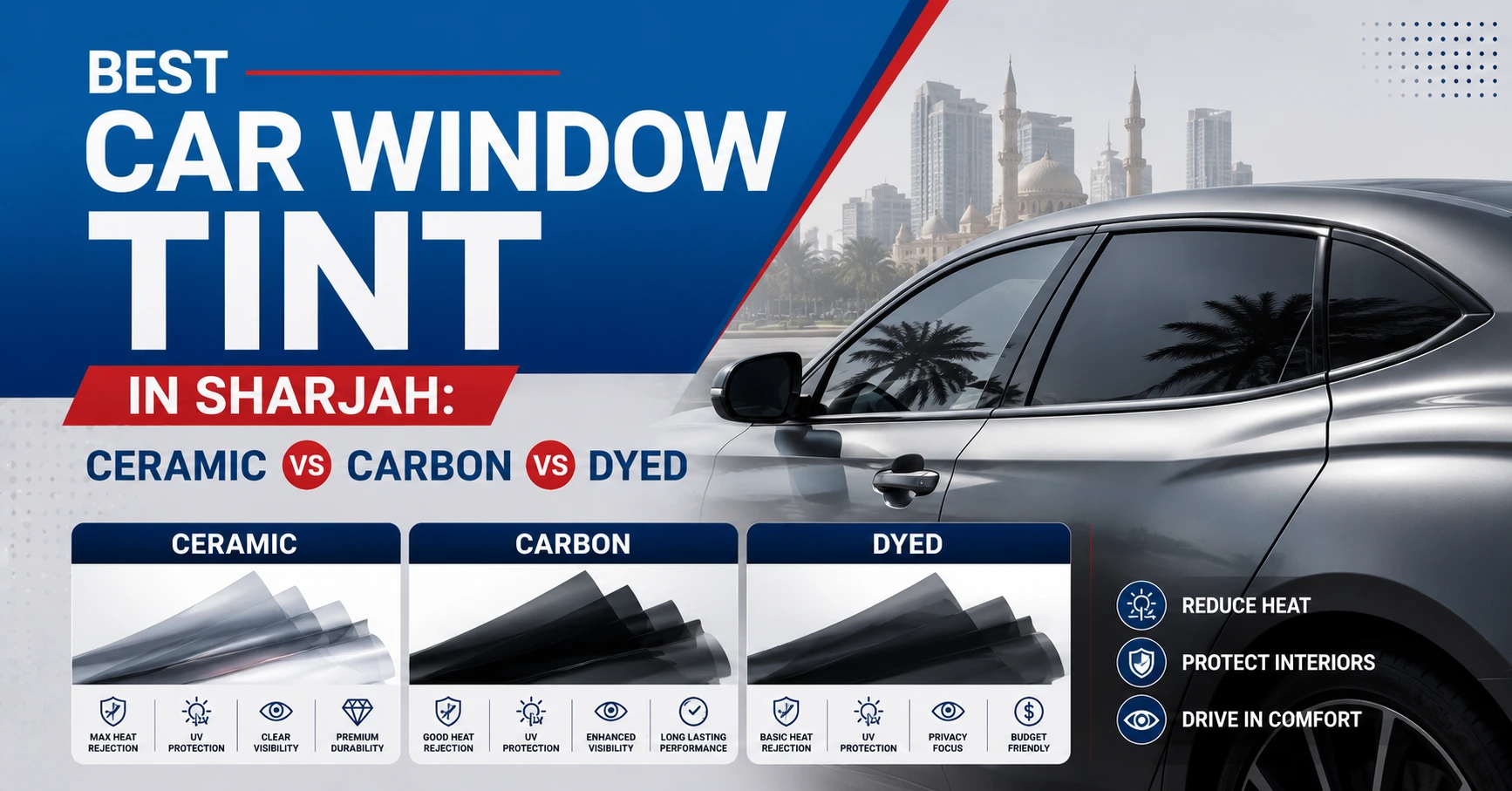
Ceramic vs Carbon vs Dyed Window Tint Comparison
| Feature | Dyed Tint | Carbon Tint | Ceramic Tint |
|---|---|---|---|
| Heat Rejection | Low | High | Excellent |
| UV Protection | Good | Excellent | Excellent |
| Infrared Blocking | Low | Moderate | Very High |
| Fade Resistance | Low | Excellent | Excellent |
| Lifespan | 3–5 Years | 8–10 Years | 10+ Years |
| Signal Interference | None | None | None |
| Interior Protection | Basic | Very Good | Excellent |
| Appearance | Dark Gloss | Matte Finish | Premium Clear |
| Cost | Low | Medium | Premium |
Which Window Tint Performs Best in Sharjah’s Heat?
One of the biggest differences between tint types is their ability to block infrared (IR) heat.
Infrared rays are responsible for most of the heat that builds inside parked vehicles.
Approximate performance:
- Dyed Tint: 10–20% IR rejection
- Carbon Tint: 40–60% IR rejection
- Ceramic Tint: 80–95% IR rejection
This means ceramic films can dramatically reduce cabin temperatures, making your vehicle noticeably cooler after parking under direct sunlight.
UV Protection Comparison
Sharjah experiences extremely high UV exposure throughout the year.
Long-term UV exposure can:
- Fade dashboard materials
- Damage leather upholstery
- Crack plastic trim
- Increase skin aging
- Raise skin cancer risk
Most premium ceramic films block:
- 99% UV rays
- Up to 95% infrared heat
Carbon films also provide excellent UV protection, while dyed films mainly focus on appearance rather than long-term protection.
Visibility During Day and Night
Many drivers believe darker tint means better protection.
This is a misconception.
Modern ceramic tint allows:
- Better outward visibility
- Reduced glare
- Excellent night driving clarity
- High heat rejection without excessive darkness
This makes ceramic film safer for everyday driving.
Does Window Tint Affect Mobile Signal?
Older metallic window films sometimes interfered with:
- GPS
- Mobile network
- Bluetooth
- RFID tags
- Salik systems
- Car key signals
Modern:
- Ceramic Tint ✔
- Carbon Tint ✔
- Dyed Tint ✔
do not interfere with electronic signals.
Cost vs Long-Term Value
Although ceramic tint costs more initially, it often provides better long-term value.
Dyed Tint
Lower upfront investment but may require replacement after only a few years due to fading.
Carbon Tint
Offers a balance between price and performance.
Ceramic Tint
Higher installation cost but:
- Longer lifespan
- Better cabin comfort
- Reduced AC load
- Better interior protection
- Higher resale value
Many Sharjah drivers find ceramic film more economical over the lifetime of the vehicle.
Which Tint Is Best for Different Drivers?
Choose Dyed Tint If
- You have a tight budget.
- Appearance is your main priority.
- You don’t drive frequently.
- You plan to sell the vehicle soon.
Choose Carbon Tint If
- You want better heat rejection.
- You prefer long-lasting performance.
- You need good value for money.
- You want a premium look without ceramic pricing.
Choose Ceramic Tint If
- Your car is parked outdoors daily.
- You drive long distances.
- You want maximum comfort.
- You own a luxury vehicle.
- You want the best protection against Sharjah’s heat.
- You prefer long-term durability.
Is Ceramic Tint Worth the Extra Cost?
For most Sharjah residents, the answer is yes.
The difference becomes noticeable every day when:
- Opening a parked vehicle
- Driving in afternoon traffic
- Using less air conditioning
- Protecting expensive leather interiors
- Keeping passengers comfortable
While ceramic film costs more upfront, many drivers consider it one of the best automotive upgrades for UAE conditions.
How Long Does Each Window Tint Last?
Approximate lifespan under UAE conditions:
| Tint Type | Expected Lifespan |
|---|---|
| Dyed | 3–5 Years |
| Carbon | 8–10 Years |
| Ceramic | 10–15 Years |
Proper installation and regular maintenance can further extend the life of premium window films.
Common Myths About Window Tint
Myth 1: Darker tint blocks more heat.
False. Heat rejection depends on the film technology, not darkness.
Myth 2: Ceramic tint is metallic.
False. Ceramic tint contains non-metallic ceramic particles.
Myth 3: All window films provide the same UV protection.
False. Premium ceramic films provide significantly better UV and infrared protection.
Myth 4: Expensive tint is unnecessary.
In extreme climates like Sharjah, higher-quality films can improve comfort, reduce interior wear, and last much longer, making them a worthwhile investment.
Frequently Asked Questions (FAQ)
Which window tint is best for Sharjah?
Ceramic window tint is generally the best choice because it offers superior heat rejection, excellent UV protection, and long-term durability in extreme temperatures.
Is ceramic tint better than carbon tint?
Yes. Ceramic tint provides better infrared heat rejection, improved visibility, and longer-lasting performance, although carbon tint remains an excellent mid-range option.
Does dyed tint fade?
Yes. Dyed window films gradually fade with prolonged exposure to intense sunlight, especially in hot climates like the UAE.
Can ceramic tint reduce AC usage?
Yes. By blocking more solar heat, ceramic tint helps keep the cabin cooler, reducing the workload on your vehicle’s air conditioning system.
Is ceramic tint legal in Sharjah?
Yes, provided it complies with UAE regulations regarding visible light transmission (VLT). Always choose a professional installer who follows local tinting laws.
Final Verdict
If you’re choosing between ceramic, carbon, and dyed window tint for your vehicle in Sharjah, the right option depends on your budget and expectations.
- Dyed Tint is ideal for budget-conscious drivers who want improved privacy and appearance but can accept lower heat rejection and a shorter lifespan.
- Carbon Tint strikes a strong balance between affordability and performance, offering better heat reduction, UV protection, and durability without signal interference.
- Ceramic Tint delivers the highest level of comfort and protection. It blocks significantly more infrared heat, filters up to 99% of harmful UV rays, maintains excellent visibility, and lasts for many years, making it the preferred choice for Sharjah’s intense climate.
For drivers who spend a lot of time on the road or regularly park outdoors, ceramic tint offers the greatest long-term value and driving comfort.